Asia continues to dominate the map of digital nomad destinations thanks to its low cost of living, reliable infrastructure, and thriving remote work communities. Whether you prefer a beach town with surf culture or a fast-paced metro with skyscrapers and coworking hubs, Asia offers options for every kind of remote worker.
Top Digital Nomad Destinations in Asia for 2026
Bali, Indonesia (Canggu, Ubud, Uluwatu)

Why it stands out
Bali has become a global hub for the digital nomad lifestyle, blending tropical beauty with a strong remote-friendly community. What makes it special is the variety of experiences packed into one island. Each area has its own personality, making it easy to find a setting that matches your pace and preferences.
Key highlights:
- Canggu for beach clubs, nightlife, and coworking hubs
- Ubud for jungle views, yoga retreats, and a slower pace
- Uluwatu for surf breaks and scenic cliffs
This Indonesian island consistently ranks among the best digital nomad destinations 2026 thanks to its creative energy and strong remote work culture.
Chiang Mai, Thailand

Why it stands out
Often considered the original hotspot among digital nomad destinations in Southeast Asia, Chiang Mai blends affordability with a strong community vibe. The Nimmanhaemin area is filled with laptop-friendly cafes and coworking spaces, making it easy to network and collaborate.
Key highlights:
- Very low monthly expenses
- Large expat and freelancer community
- Calm lifestyle surrounded by mountains
- Excellent cafes and productivity-friendly spaces
Chiang Mai remains one of the cheapest countries for remote workers when comparing overall lifestyle value in Asia.
Da Nang, Vietnam
Why it stands out
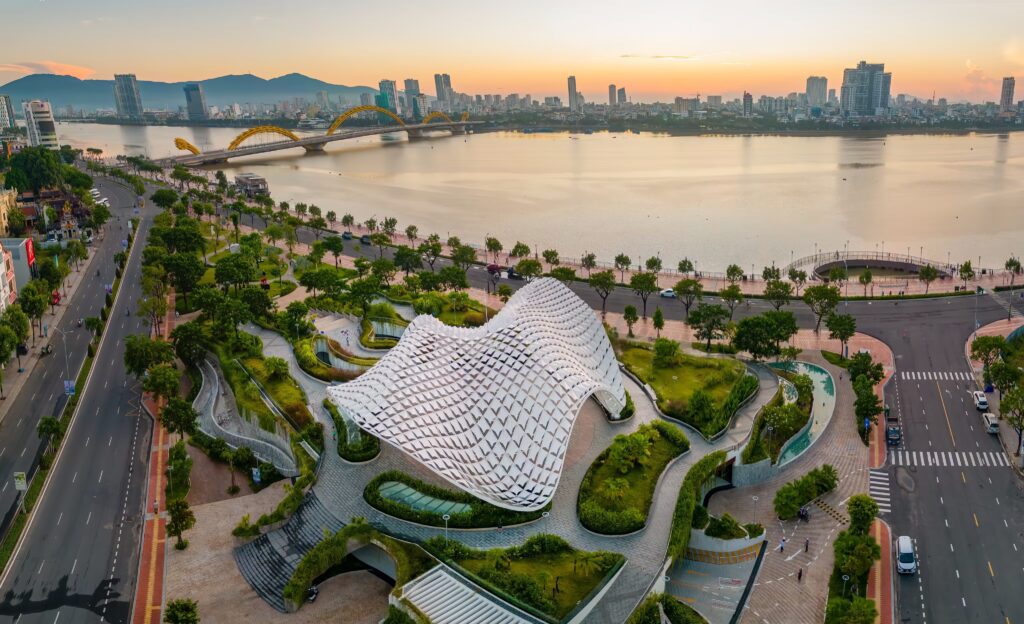
Da Nang is emerging as one of the most promising digital nomad destinations in Asia. It offers a balance of beach living and urban comfort without the chaos of larger Vietnamese cities.
Key highlights:
- Affordable beachfront apartments
- Growing coworking community
- Access to mountains and scenic landscapes
- Relaxed, laid-back environment
For those researching affordable digital nomad countries, Da Nang typically allows a comfortable monthly budget within the $800 to $1,200 range.
Bangkok, Thailand

Why it stands out
If you prefer an energetic metro, Bangkok delivers. As one of the most connected cities in Asia, it’s ideal for remote workers who want world-class amenities without Western price tags.
Key highlights:
- High-speed internet across the city
- Endless coworking spaces
- Modern condos at reasonable rents
- International food and nightlife
Bangkok is frequently listed among the best cities for remote work for those who enjoy fast-paced urban living.
Kuala Lumpur, Malaysia
Why it stands out
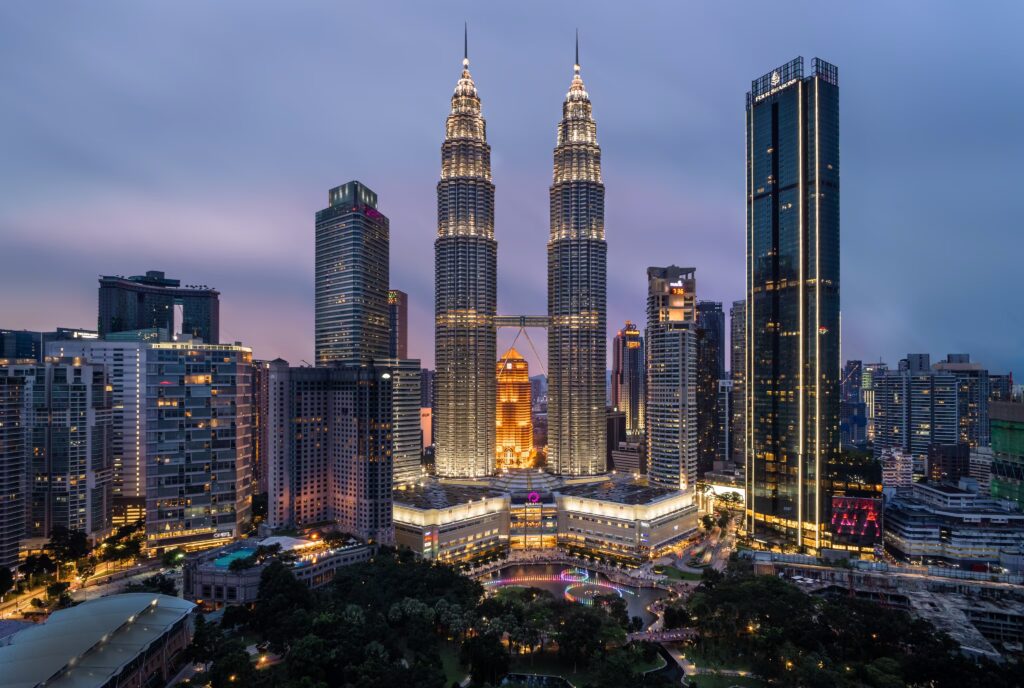
Kuala Lumpur offers a polished city lifestyle at competitive rates. High-rise condo living with pools and gyms is surprisingly affordable, making it a top choice for those comparing the cost of living for digital nomads.
Key highlights:
- Strong public transport
- International community
- Modern infrastructure
- Excellent food diversity
Malaysia’s DE Rantau Pass makes it especially appealing for those searching for countries offering digital nomad visas.
Taipei, Taiwan

Why it stands out
Taipei is often underrated among remote work travel destinations. It is clean, safe, and technologically advanced, making it ideal for tech-savvy freelancers.
Key highlights:
- Reliable, high-speed internet
- Efficient public transportation
- Safe environment
- Strong startup ecosystem
For digital professionals seeking stability and city convenience, Taipei is one of the most reliable digital nomad friendly countries in Asia.
Thai Islands (Koh Lanta & Koh Phangan)

Why they stand out
Thailand’s islands offer two different takes on island-based remote work:
Key highlights:
- Koh Lanta for quiet, community-driven living
- Koh Phangan for nature-focused stays and a growing work-from-anywhere scene
They are excellent options for those prioritizing balance, wellness, and beach life within the broader landscape of digital nomad destinations in Southeast Asia.
Sri Lanka (Weligama & Hikkaduwa)
Why it stands out
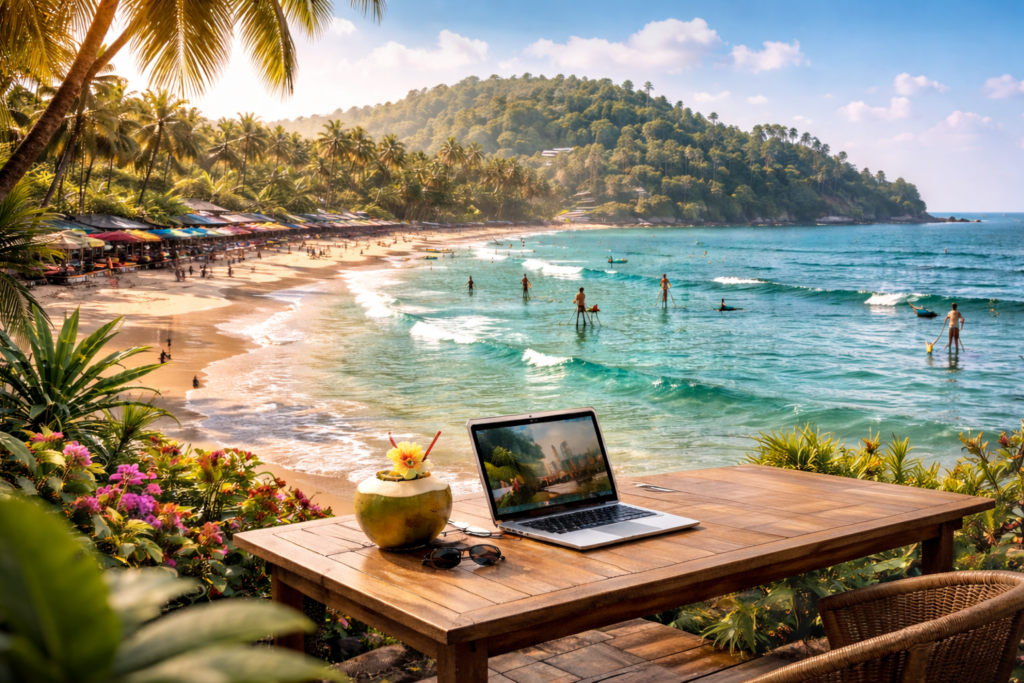
Sri Lanka is gaining momentum among affordable cities for digital nomads. Coastal towns like Weligama and Hikkaduwa attract surfers and freelancers looking for low costs and scenic ocean views.
Key highlights:
- Very affordable rent
- Surf-friendly beaches
- Tight-knit expat communities
- Relaxed coastal lifestyle
Key Considerations for Choosing Digital Nomad Destinations in Asia
1. Visas
Visa flexibility is a key factor when comparing digital nomad destinations in Asia. Longer stays, straightforward renewals, and remote-friendly policies make certain countries stand out.
Thailand offers various tourist visa options and extensions, along with its Long-Term Resident visa aimed at high-income remote professionals.
Malaysia provides the DE Rantau Pass, a structured long-stay program specifically designed for remote professionals and freelancers.
Indonesia (Bali) offers multiple tourist and business visa pathways that allow extended stays. While a dedicated digital nomad visa is still evolving, Bali remains one of the most accessible long-stay hubs in Southeast Asia.
Vietnam issues e-visas with extended validity, making medium-term stays relatively simple. It does not currently have a dedicated digital nomad visa.
Sri Lanka allows extended tourist stays and has expressed interest in attracting remote professionals, making it suitable for slower, lifestyle-driven stays.
Taiwan offers its Employment Gold Card, a multi-year residency program for qualified foreign professionals. While not exclusively labeled a digital nomad visa, it functions as a strong long-term option for location-independent professionals meeting eligibility criteria.
Always review the latest digital nomad visa requirements before planning a long stay.
2. Cost of Living
Across most Southeast Asian hubs, a monthly budget between $800 and $1,500 supports a comfortable lifestyle, including rent, food, and coworking.
Chiang Mai and Da Nang sit at the lower end, while Taipei and central Bangkok trend slightly higher.
3. Best Time to Visit
For most digital nomad destinations in Southeast Asia, November to March offers the most pleasant weather. This period avoids extreme heat and the smoky season in Northern Thailand.
4. Infrastructure & Internet
High-speed Wi-Fi is widely available across all listed locations. Coworking spaces are common in major hubs, making these cities ideal for professionals who depend on stable connectivity.
Final Thoughts
Asia remains one of the most compelling regions for the digital nomad lifestyle in 2026. Whether you choose the mountains of Chiang Mai, the surf culture of Bali, the beaches of Da Nang, or the skyscrapers of Kuala Lumpur, each destination offers a unique version of remote work freedom.
FAQs:
Some of the best countries for digital nomads in Asia include Thailand, Indonesia, Vietnam, Malaysia, and Taiwan. These destinations offer affordable living, strong internet infrastructure, coworking spaces, and active remote work communities.
Malaysia is considered one of the easiest countries in Asia due to its DE Rantau Pass designed specifically for remote workers. Thailand also offers flexible short-term visa options popular among digital nomads.
On average, $800 to $1,500 per month covers rent, food, transport, and coworking in cities like Chiang Mai or Da Nang. Costs may be higher in Taipei or central Bangkok.
Yes. Major hubs such as Bangkok, Kuala Lumpur, Bali, and Taipei offer high-speed Wi-Fi, modern coworking spaces, and strong mobile data networks suitable for remote work.
November to March is generally the best period. The weather is cooler and more comfortable, and it avoids peak heat and smoky season in Northern Thailand.